Last updated November 22, 2026
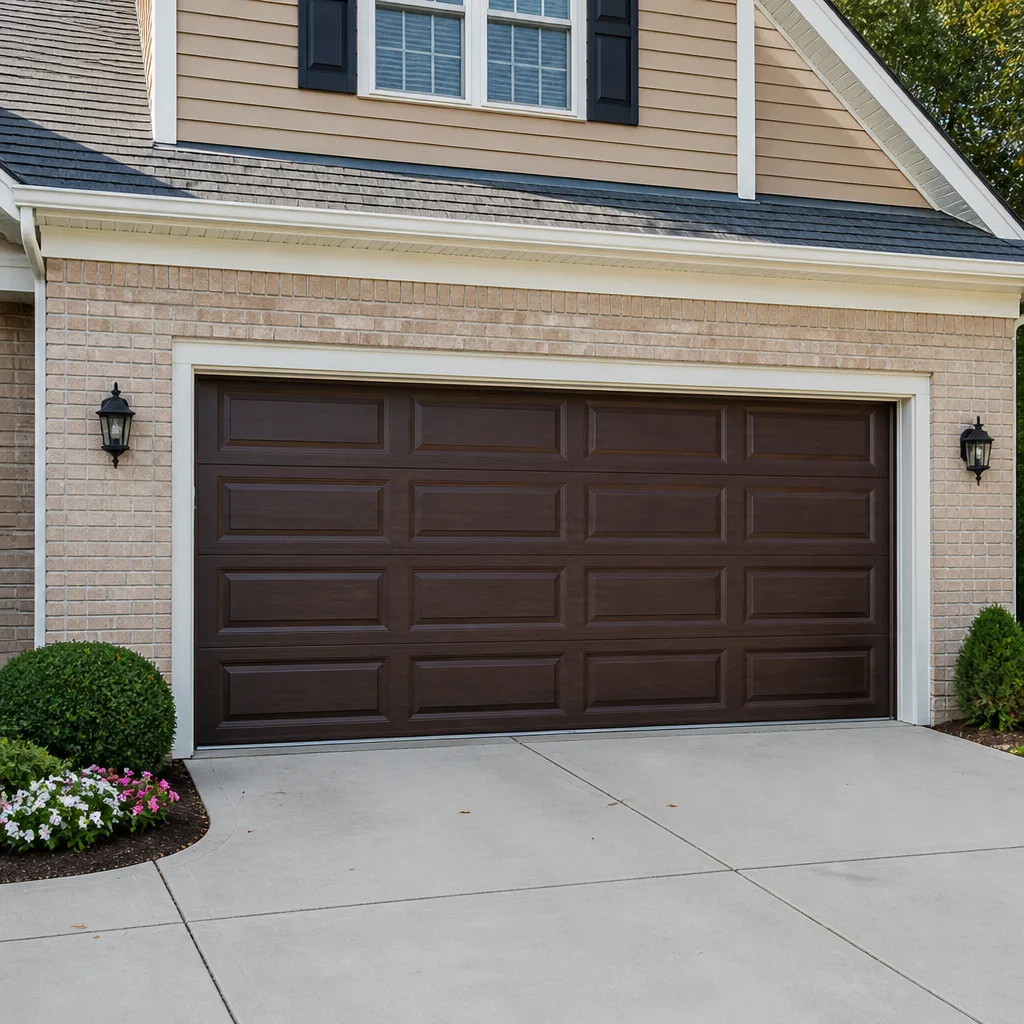 Raised-panel steel
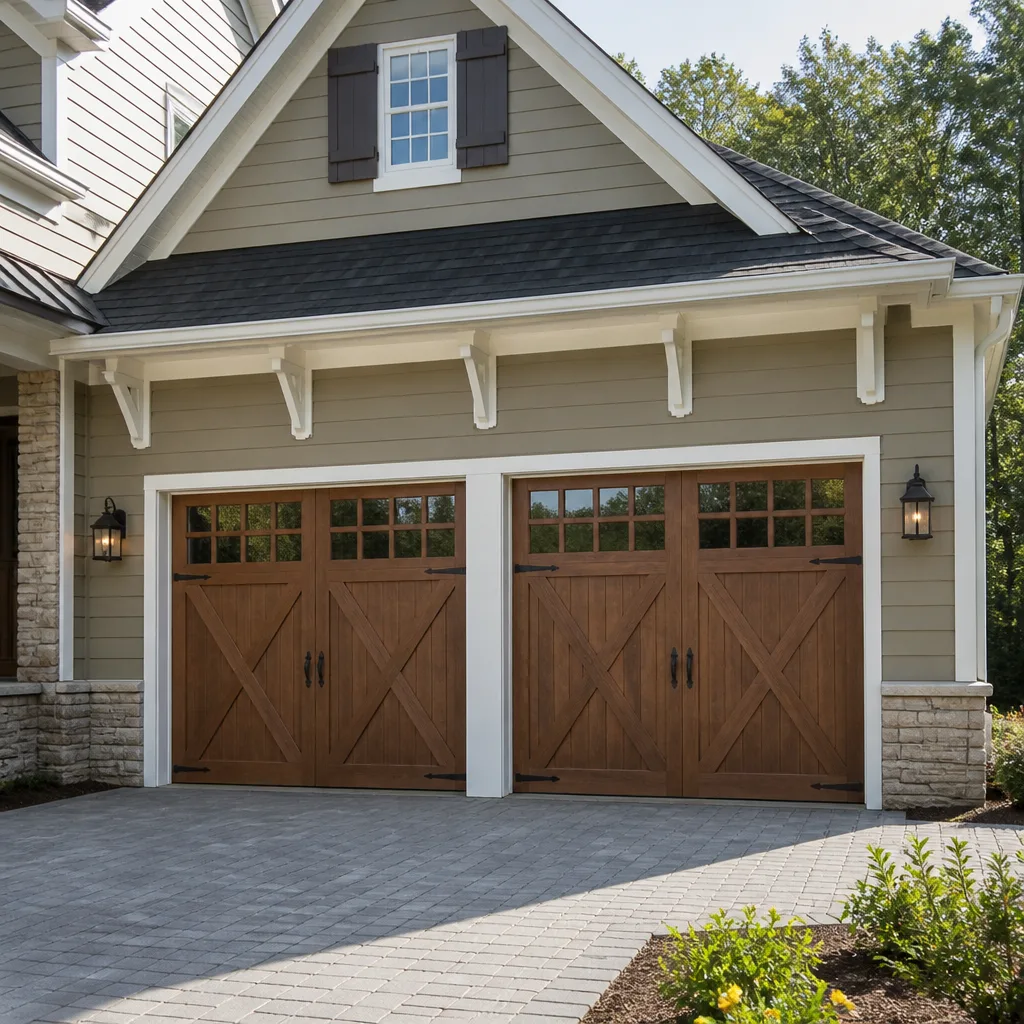 Carriage house
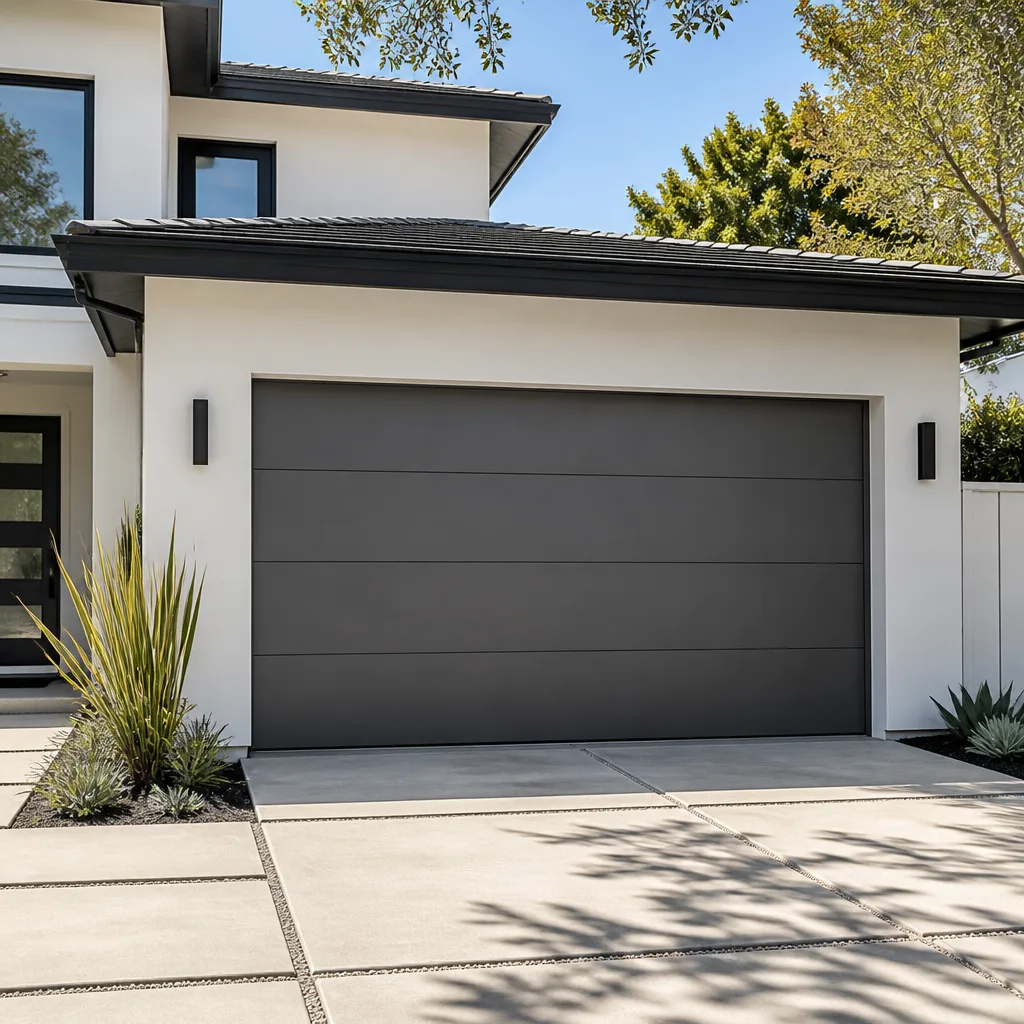 Modern flush
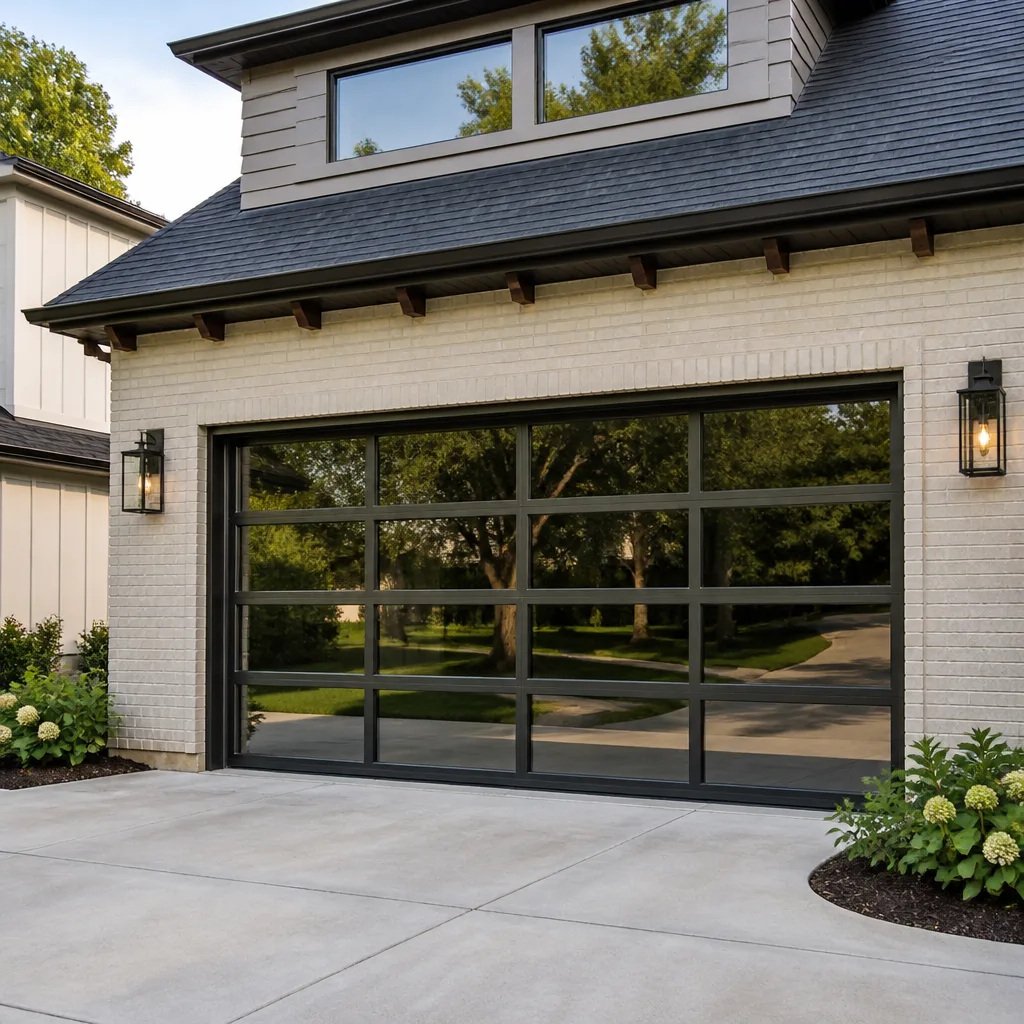 Full-view glass
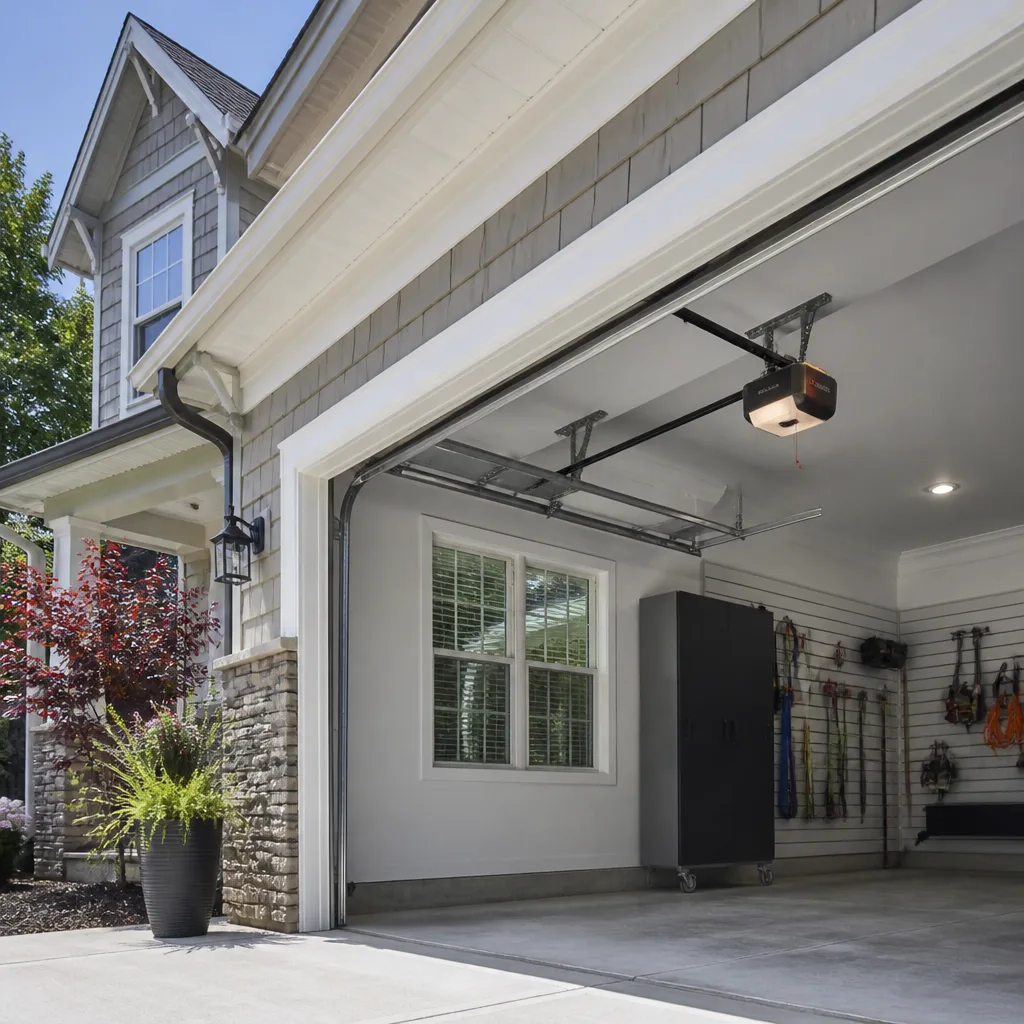 LiftMaster openers
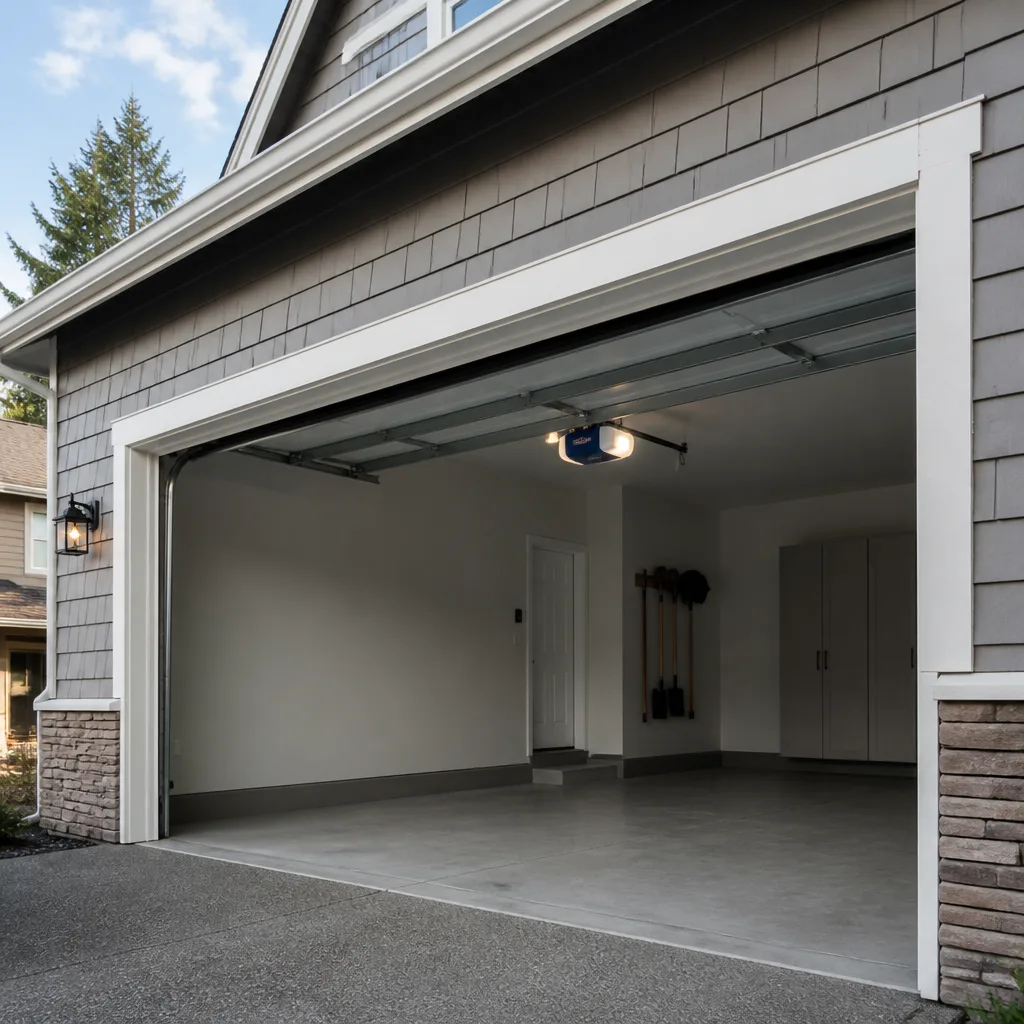 Chamberlain openers
Full 25-point door and opener safety check with every visit - springs, cables, rollers, tracks, and your LiftMaster or Chamberlain opener included
You get a price before we start. It does not change when the pro arrives.
Get your free estimateThe Complete Guide to Garage Doors in Strongsville
Most Strongsville homeowners will replace a garage door exactly once. Because the decision comes around so rarely, there’s no instinct to fall back on, so the default is to grab whatever the big-box store is promoting that season. That’s usually where the wrong door gets ordered. Strongsville’s freeze-thaw swings, its attached-garage layouts, and the design rules of its subdivisions all narrow the field long before you pick a color. This guide walks through what actually matters here: how each material holds up through Northeast Ohio winters, why insulation matters more than the brochures admit, what you own inside the door system, and when a City of Strongsville inspection comes into play.
Quick Answer
A garage door in Strongsville should be chosen for winter performance first and looks second: an insulated steel door is the default for attached garages, wood and composite need more upkeep through freeze-thaw cycles, and HOA rules in many Strongsville subdivisions set color and style limits before you shop. Repairs like springs, cables, rollers and openers are separate decisions from replacement, and whether a permit or inspection is required depends on the scope of work, so confirming with the City of Strongsville building department is always the first step.
Styles & brands we work with
- Raised-panel steel
- Carriage house
- Modern flush
- Full-view glass
- LiftMaster openers
- Chamberlain openers
Table of Contents
- How Northeast Ohio’s freeze-thaw cycles affect door materials
- Steel vs. wood vs. composite: a material comparison
- Strongsville HOA rules and neighborhood style limits
- Why insulation matters more in an attached garage
- What you actually own: springs, cables, panels and openers
- Local permit triggers and City of Strongsville inspections
- Repair or replace: how to decide
- A seasonal maintenance routine for Strongsville
How Northeast Ohio’s freeze-thaw cycles affect a garage door
Strongsville sits in a climate that swings above and below freezing repeatedly through winter and early spring. That cycle is harder on a garage door than a long, steady cold snap, because every thaw lets moisture into seams, joints and wood grain, and every refreeze expands it. Over a few seasons, that expansion and contraction works on hinges, rollers, weather seals and panel edges.
What that means in practice depends on the material:
- Steel doors handle freeze-thaw well because the panels don’t absorb water. The weak points are the bottom seal, which can crack and let meltwater sit against the panel edge, and any scratched or chipped paint where moisture can start surface rust.
- Wood doors are the most exposed. Wood takes on moisture at the joints and along the bottom rail, and repeated swelling and drying leads to splitting, warping and paint failure. A wood door in Strongsville needs repainting or resealing on a tighter schedule than the same door would need in a drier climate.
- Composite doors resist moisture far better than wood and don’t rust like steel, which makes them a reasonable middle option. They still rely on good seals and correct installation to keep water out of the frame and hardware.
The related issue is the door’s balance. When cold stiffens the lubricant in the rollers and hinges, a door that was borderline balanced in fall can start straining the opener in January. That’s one reason a routine pre-winter lubrication and balance check pays for itself.
We see this pattern every winter across Strongsville, and it’s why we treat the bottom seal and the door’s balance as the two things worth checking before the first hard freeze.
Steel vs. wood vs. composite: a material comparison
Every material has a trade-off. The right pick for a Strongsville home depends on whether that garage is attached or detached, how much upkeep you’re willing to take on, and what your subdivision allows.
- Insulated steel: The most common choice for attached garages here. It’s low-maintenance, holds its finish, and offers good thermal performance with a foam core. It can dent on impact, but dents are usually cosmetic. Clopay and Amarr both make steel lines that hold up well through Northeast Ohio winters.
- Wood: The best curb appeal if you have a historic or custom home, and it can be stained and refinished to match trim. The catch is maintenance: it needs regular sealing and paint work to survive freeze-thaw cycles, and once moisture gets into joints, repairs get expensive.
- Composite: Looks like wood, resists moisture like a synthetic, and doesn’t need the same refinishing schedule. It costs more than basic steel and less than premium wood, and it’s a sensible fit for homeowners who want a wood look without the seasonal upkeep.
- Aluminum and glass: Attractive on modern or contemporary homes, but glass panels offer less insulation and need careful handling. Less common in Strongsville’s traditional subdivisions, more common on newer builds.
For most Strongsville homes with an attached garage, insulated steel is the practical default. Composite makes sense when you want a wood aesthetic and don’t want to repaint every few years. Wood earns its place on homes where the architecture calls for it and the owner is prepared to maintain it.
If you’re weighing a full replacement, our garage door installation page covers how a proper measure and install runs from start to finish.
Strongsville HOA rules and neighborhood style limits
This is the part of the decision most homeowners hit too late: many Strongsville subdivisions have architectural review requirements that set the allowed colors, panel styles and sometimes the material itself. If you order a door before checking, you can end up with something that has to be repainted or replaced to satisfy the review committee.
Before you shop, work through these steps:
- Find your subdivision’s architectural or design guidelines. If you have an HOA, they’ll have a document listing approved colors and door styles.
- Submit the proposed door, color and material to the review committee for approval before ordering. Many require a photo or spec sheet.
- Check whether the guidelines match what the neighboring homes actually have – sometimes the written rules are older than the current look of the street.
- Confirm the approval in writing so there’s a record when the installer arrives.
The common restrictions in Strongsville subdivisions tend to run toward neutral, earth-tone colors, traditional raised-panel or carriage-house profiles, and limits on windows or decorative hardware. A bright color or a very modern flush-panel door can be a quick rejection. Because the rules vary by subdivision, it’s worth confirming with your HOA before any deposit. When we quote a replacement in Strongsville, we ask about HOA approval up front, because getting it wrong costs more than the door.
Why insulation matters more for an attached garage in this climate
In a detached garage, insulation is mostly about comfort and protecting what’s stored inside. In an attached garage, it’s a different equation. The garage shares at least one wall with the house, and often a ceiling below a bedroom or living space. An uninsulated door lets cold air pour into that space, and in a Strongsville winter that means the shared wall stays cold and the rooms above or beside the garage feel it.
What insulation does for an attached garage:
- Buffers the shared wall. A warmer garage means a warmer house-side wall, which takes pressure off the rooms next to and above the garage.
- Reduces drafts into the house. Cold air pushing through gaps around the door finds its way into the living space through any weak point in the wall assembly.
- Protects the garage itself. A garage that stays above freezing is easier on stored items, water lines, and anything you keep out there through the winter.
- Helps the opener and door. Less condensation and less temperature swing means less strain on hardware over time.
The door’s thermal performance comes from the combination of a foam core, the panel thickness, and good weather seals around the perimeter and bottom. A well-insulated door with bad seals still leaks. So if you’re upgrading insulation, budget for new weather stripping and a bottom seal at the same time. That’s the single most overlooked piece of the upgrade in this climate.
What you actually own: springs, cables, panels and openers
Most homeowners only learn how a garage door works when something breaks. Understanding the parts makes it easier to see why a repair costs what it does, and why some jobs are genuinely dangerous to attempt yourself.
- Torsion springs sit on a shaft above the door and do the heavy lifting. They’re under high tension and are the most dangerous part of the system. A snapped torsion spring is the most common reason a door won’t open.
- Extension springs run along the horizontal tracks on either side. Older doors often use them, and they also carry significant tension.
- Cables connect the door to the spring system and keep it level. A frayed or snapped cable is a safety concern, not a tune-up item.
- Panels are the door’s face and structure. Dents and damage are common on the bottom panel, which takes the most abuse.
- Rollers and hinges are the moving joints. They wear out quietly and are the usual cause of a noisy, jerky door.
- The opener is the motor and drive. Belt drives are quieter, chain drives are more common in Strongsville’s older homes, and screw drives are less common but still out there.
We work on your brand no matter which system you own – LiftMaster, Chamberlain, Genie, Clopay, Amarr, Wayne Dalton, Craftsman and Raynor all come through our shop, and our technicians have up to 8 years of experience diagnosing each one. If your opener is failing, our garage door opener repair page covers the common failure points. For spring and cable failures, see our garage door repair page.
Safety note: torsion springs, extension springs and cables are under enough tension to cause serious injury. Don’t attempt to adjust, unwind or replace them yourself. Call a trained professional.
Local permit triggers and City of Strongsville inspections
Not every garage door job requires a permit, but the line isn’t always obvious. As a rule of thumb, a straight swap of door panels and hardware onto the existing frame and tracks usually doesn’t require a permit, while structural changes to the opening, changes to the header, or new electrical work for an opener often do. The exact triggers sit with the City of Strongsville building department, so confirm before scheduling work – the friendly person at the permit desk can tell you in one phone call whether your job needs one.
Jobs that commonly head toward permit or inspection questions:
- Cutting or modifying the header above the garage opening to fit a taller or wider door.
- Adding a new electrical circuit or outlet for an opener where none existed.
- Structural changes to the opening frame or surrounding wall.
- Converting a garage into a different use (which is well outside a garage door job but comes up more than you’d think).
- A full replacement where the new door isn’t a like-for-like swap of the old one.
A like-for-like replacement of an existing door with the same size and style, installed onto the existing hardware, is the scenario most likely to skip the permit process. Anything that changes the size, the structure, or the electrical service is worth a call to the city. Ask your HOA too – the architectural review and the city permit are two separate checkpoints, and passing one doesn’t satisfy the other.
Repair or replace: how to decide
This is where a specialist with full installation capability earns their keep. A company that only repairs will lean toward repair, and a company that only installs will lean toward replacement. Being able to do both means the honest answer isn’t tied to the invoice.
Lean toward repair when:
- The door structure is sound and only the springs, cables, rollers or opener have failed.
- The panels are intact and the finish is holding.
- The door is balanced and the tracks are straight.
- The cost of repairs is small compared to a new door.
Lean toward replacement when:
- Multiple panels are dented or rotted, especially the bottom section.
- The door is out of balance and the tracks or hinges are bent.
- You’re facing a second round of major repairs on the same system.
- Insulation and seals are so far gone that the garage no longer buffers the house.
- You want a different material or style to satisfy HOA rules or match a renovation.
Repair or replace – we’ll tell you which one actually makes sense after looking at the door. That’s the call we make on every Strongsville job, and it’s the answer we give whether or not it means a bigger ticket.
A seasonal maintenance routine for Strongsville
A little upkeep goes a long way in this climate. These are the checks worth doing twice a year – once before winter and once in spring after the thaw.
- Lubricate the moving parts. Rollers, hinges, and the torsion shaft get a garage-door lubricant, not WD-40. This keeps the door running smoothly when the cold stiffens everything.
- Check the bottom seal. Look for cracks, gaps or a seal that’s pulled away from the door. Replace it before winter so meltwater doesn’t sit against the panel edge.
- Test the balance. Disconnect the opener and lift the door halfway. It should stay put. If it drops or rises on its own, the springs are out of balance.
- Test the safety reverse. Put an object in the door’s path and confirm it reverses. If it doesn’t, the opener needs adjustment or repair.
- Inspect the cables and springs visually. Look for fraying, rust or a visible gap in a spring coil. If you see either, stop using the door and call a professional – don’t try to fix it yourself.
- Clear the tracks. Wipe out grit and debris so the rollers don’t bind.
- Check the paint and finish. Touch up any chipped paint on steel doors before winter so moisture can’t start surface rust.
Do these checks in October and again in April. Most of the emergency calls we take in Strongsville come from a door that was already showing one of these warning signs months earlier.
Common Mistakes to Avoid
- Ordering a door before checking HOA approval. Many Strongsville subdivisions require architectural review on color and style, and a door that doesn’t pass has to be repainted or replaced at your cost. Get the approval in writing first.
- Skipping the insulation decision. A homeowner with an attached garage who buys an uninsulated door to save money usually regrets it the first cold snap. The shared-wall effect is real in this climate.
- Choosing a material without thinking about winter upkeep. A wood door looks great, but in Strongsville it needs regular sealing and paint work to survive freeze-thaw cycles. Pick a material you’re willing to maintain.
- DIY spring work. Torsion and extension springs are under high tension and are the number one source of serious garage door injuries. Leave them to a trained technician.
- Ignoring the permit question. A like-for-like swap usually doesn’t need a permit, but any structural or electrical change might. Call the City of Strongsville building department before scheduling the work.
- Replacing the door but keeping the old opener. A new insulated door is heavier than an old uninsulated one, and an older opener may not be rated for it. Check the opener’s capacity at the same time.
- Treating a bent track or frayed cable as a minor issue. Both are signs the door’s balance is off, and both get worse – and more expensive – the longer they’re left.
See the difference
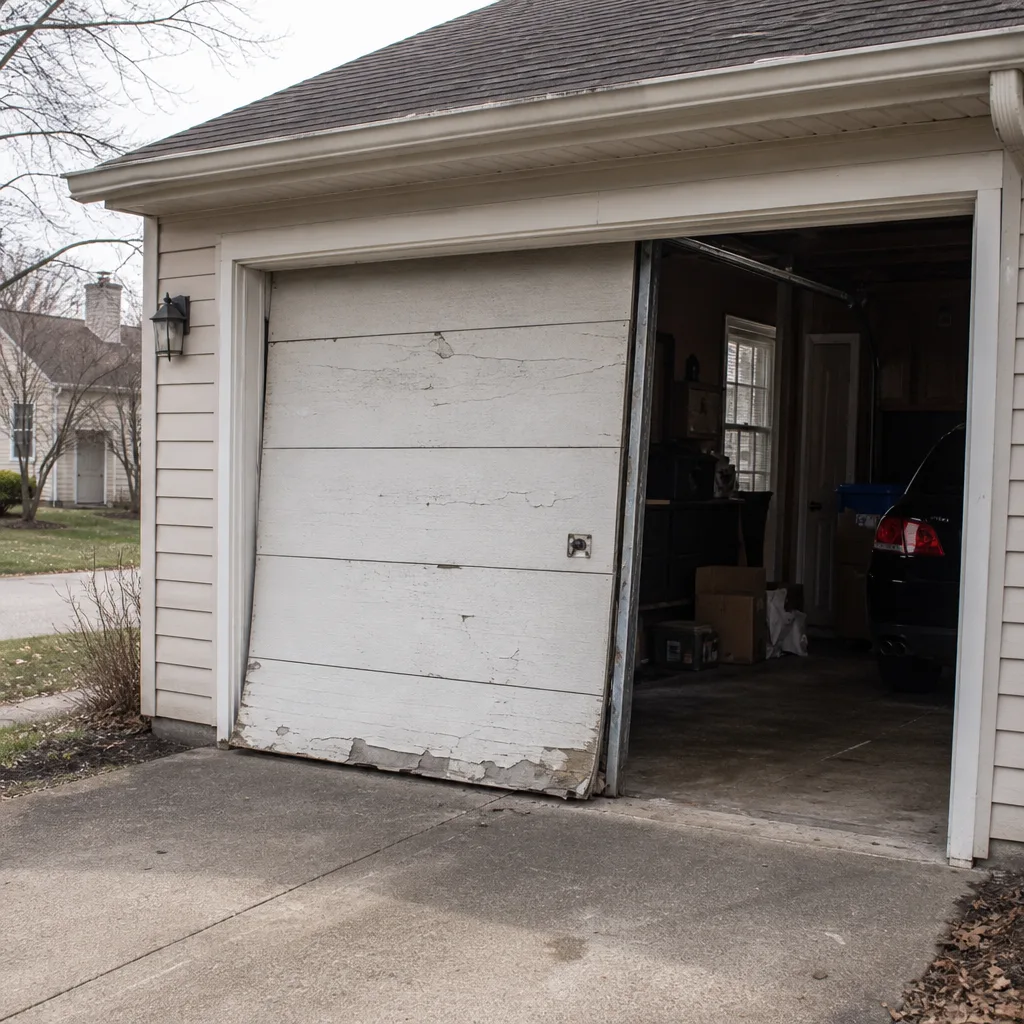 Before
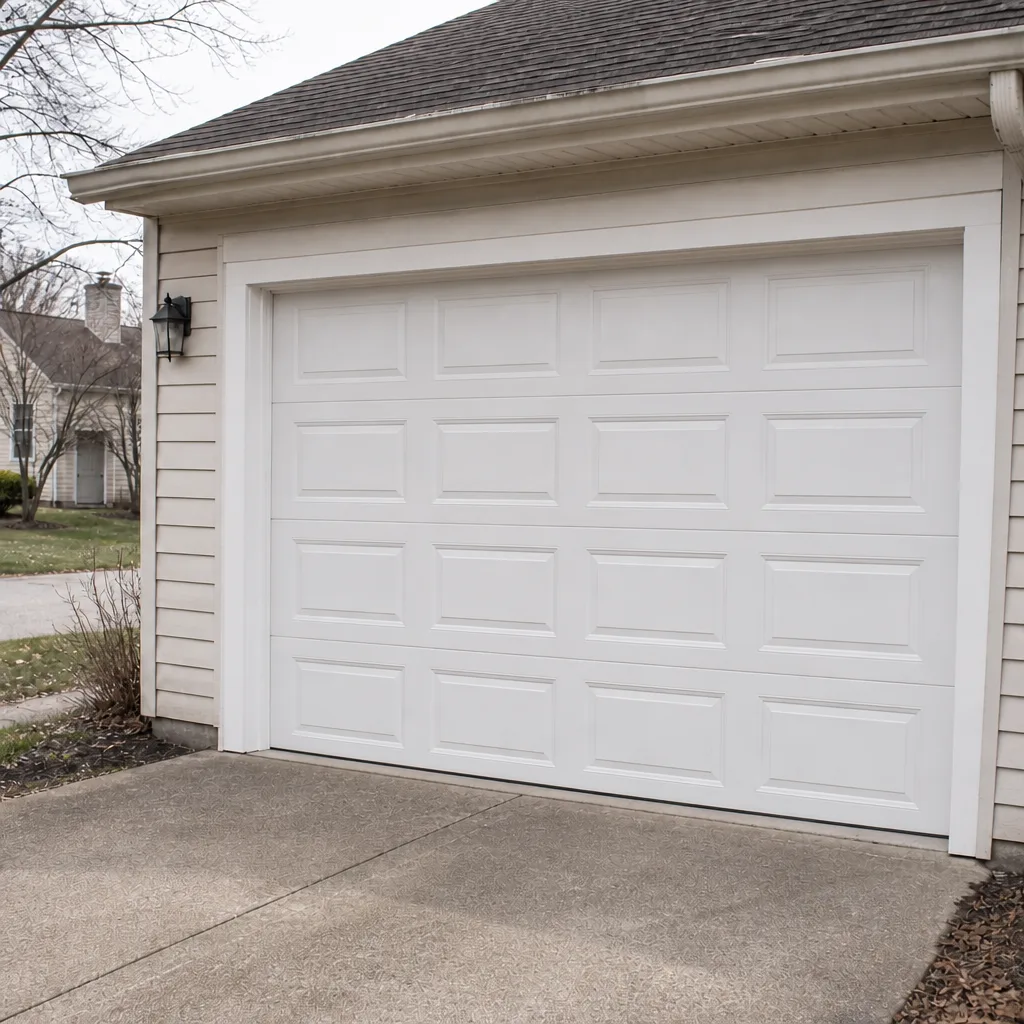 After
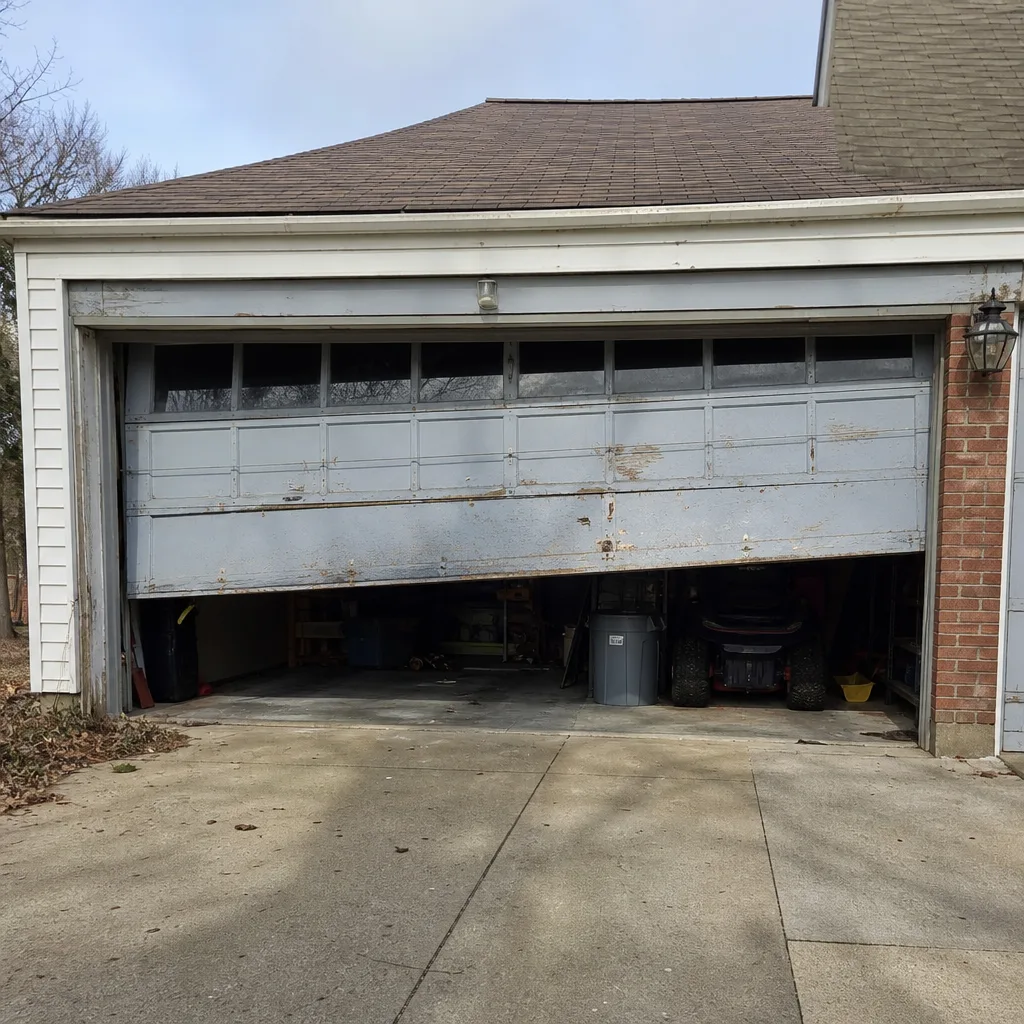 Before
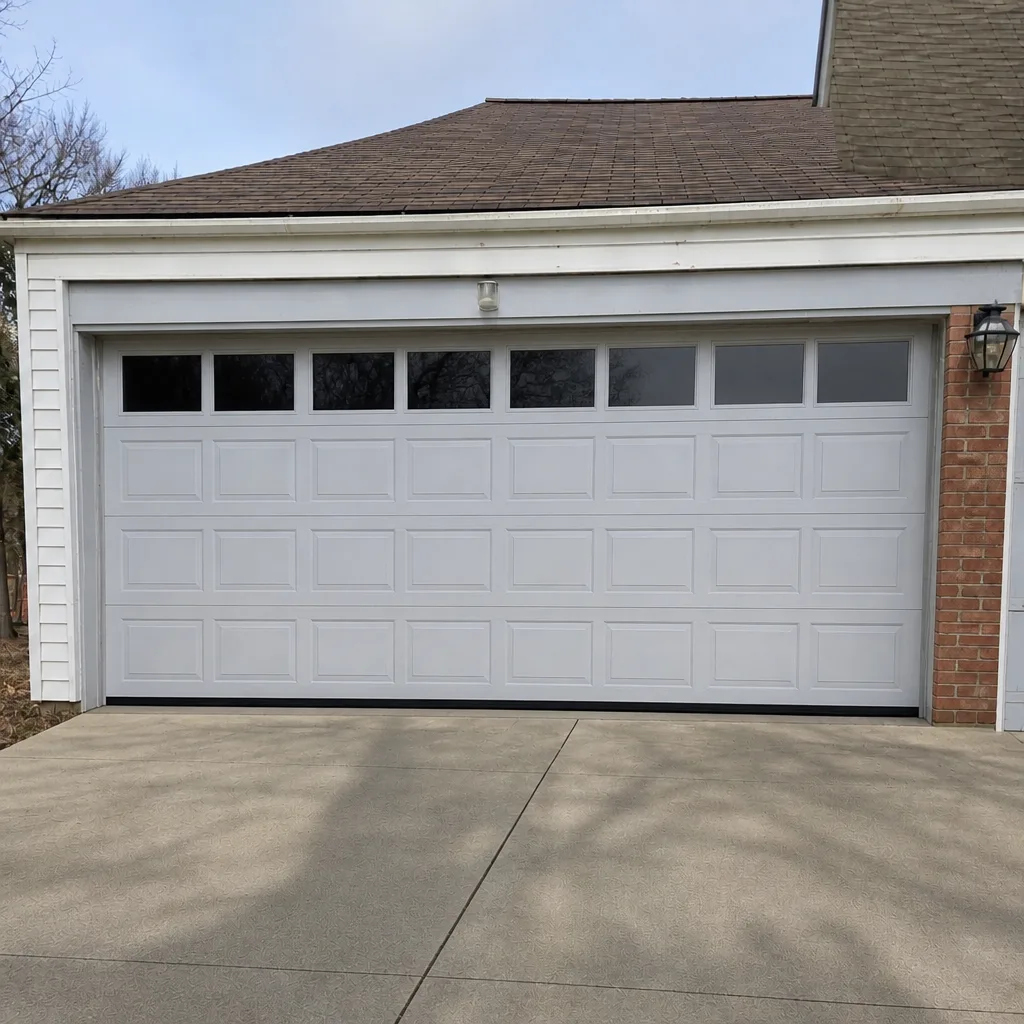 After
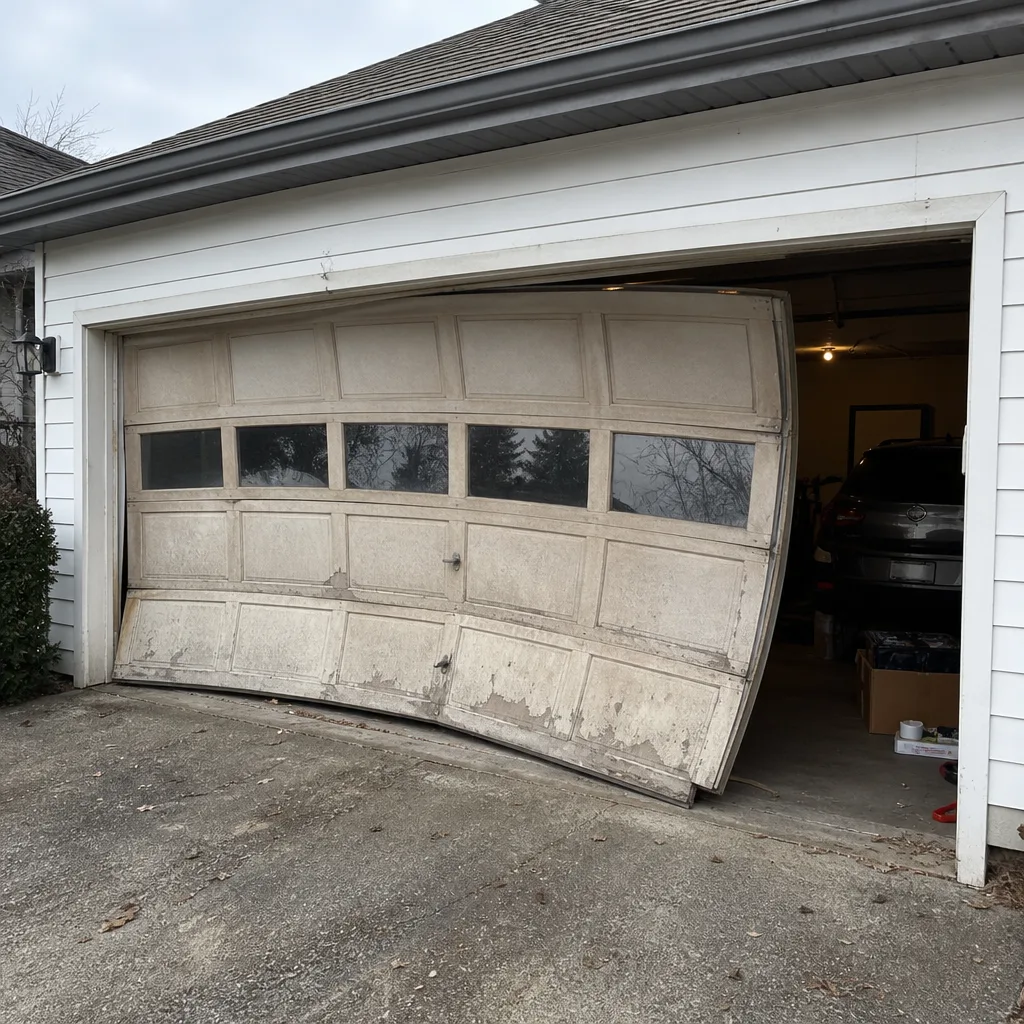 Before
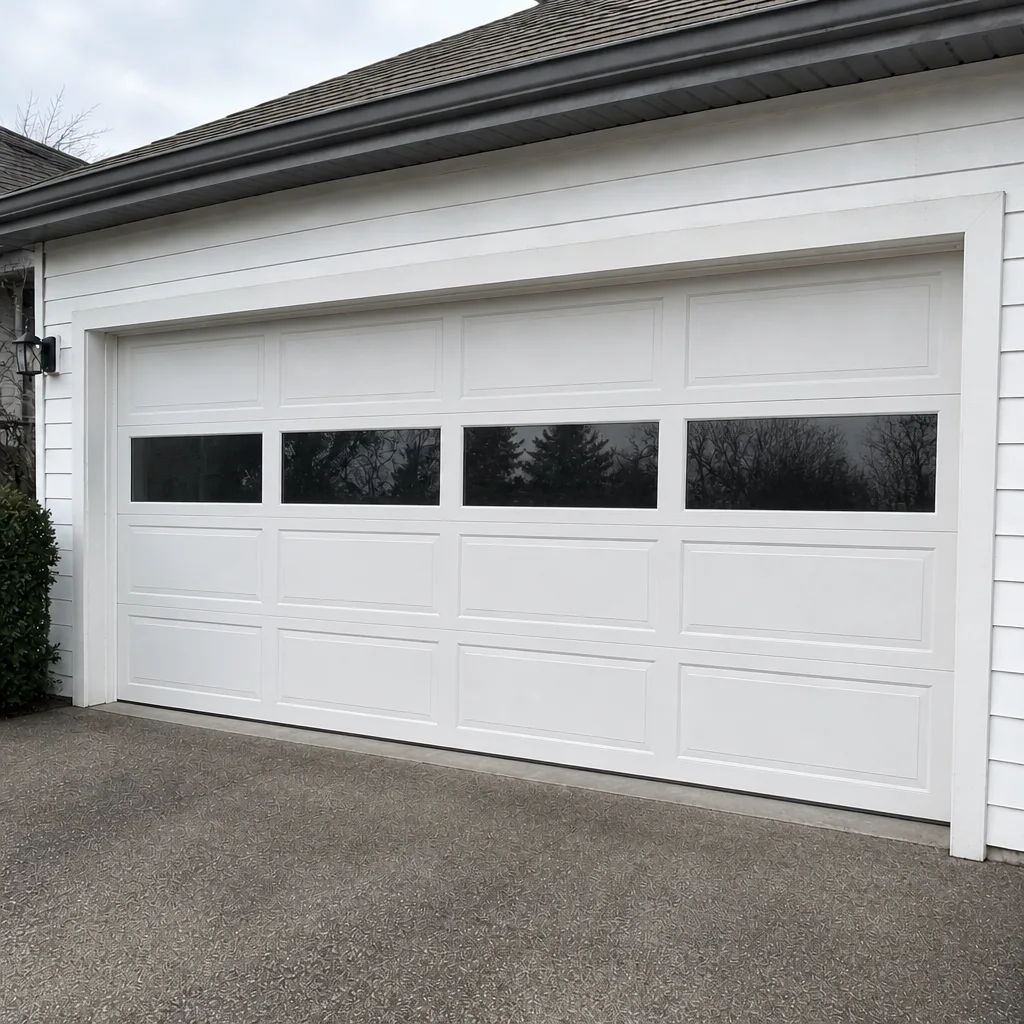 After
When to Call a Professional
Some jobs are a maintenance task. Others need a specialist. Call a professional when a torsion or extension spring has snapped, when a cable is frayed or hanging, when the door won’t open or close, or when the opener runs but the door doesn’t move. Those are the calls where a wrong move can hurt someone or damage the door further. Also call when the door is out of balance, when the tracks are visibly bent, or when the bottom panel is damaged enough that the seal no longer sits flat. An emergency call is right when the door won’t close at night or won’t open with a car trapped inside – those can’t wait for a next-day appointment. Strongsville Garage Door Repair Pros offers free estimates in Strongsville – call (855) 819-6202 and we’ll get you a written price before any work begins.
Frequently Asked Questions
An installed garage door in Strongsville typically runs a wide range depending on material, insulation and size. Basic uninsulated steel is the low end, insulated steel with windows lands in the middle, and wood or custom carriage-house doors sit at the top. The written estimate sets the final price, and we provide that after a free measure. Call (855) 819-6202 for an exact quote – estimates are free.
A like-for-like replacement onto the existing frame and hardware usually doesn’t need a permit. Any structural change to the opening or new electrical work for the opener likely does, so confirm with the City of Strongsville building department before scheduling. It’s one call and it saves headaches later.
Insulated steel is the most practical choice for attached garages in Strongsville. It handles freeze-thaw cycles well, holds its finish, and offers good thermal performance. Composite is a solid second option if you want a wood look with less upkeep. Wood is beautiful but needs regular sealing and repainting to survive here.
A standard replacement is usually measured first, ordered, then installed in a single visit once the door arrives. The measure and quote come first, so installation isn’t a same-day job – the door has to be built and delivered. We’ll give you a written price and a scheduled install date after the measure.
Usually, yes, but the opener has to be rated for the door’s weight. A new insulated door is heavier than an older uninsulated one, so it’s worth confirming the opener’s capacity when you’re replacing the door. We test the match as part of the quote.
For repair calls – springs, cables, openers, rollers – we aim for same-day service and offer fast dispatch from 7am to 7pm. Emergency service is available when the door won’t close or won’t open and a car is trapped. Call (855) 819-6202 and we’ll give you a time window and an upfront price before we start.
The Bottom Line
Choose your Strongsville garage door for winter performance first and looks second. Insulated steel is the practical default for attached garages, composite is a sensible compromise, and wood is a commitment to maintenance. Check your HOA and the City of Strongsville building department before you order anything. Know what you own – springs, cables, panels and openers – so you can tell a tune-up from a safety issue, and call a professional for anything involving tension. Repair or replace is a judgment call, and it’s one a specialist with full installation capability can make honestly. Our team at Strongsville Garage Door Repair Pros is here to make the call with you, and to back it up with a written price.
Get a Free Estimate from a Garage Door Specialist
Whether you’re replacing a failing door, dealing with a snapped spring, or getting an opener back online, we’re the specialists you call – not a general contractor. Our Strongsville Garage Door Repair Pros team connects you with a vetted local professional who works on your brand and quotes the price before any work starts. Call (855) 819-6202 for a free estimate and a straight answer on repair or replace.
Written by the team at Strongsville Garage Door Repair Pros.